Why the People You Live With Shape Your Business More Than Your Tools
- Circles House
- 11 minutes ago
- 3 min read
Most entrepreneurs spend their energy chasing better software. A faster CRM, a smarter automation stack, the newest AI assistant promising to save ten hours a week. These upgrades feel productive because they are measurable and immediate. You install something, you feel the click of progress.
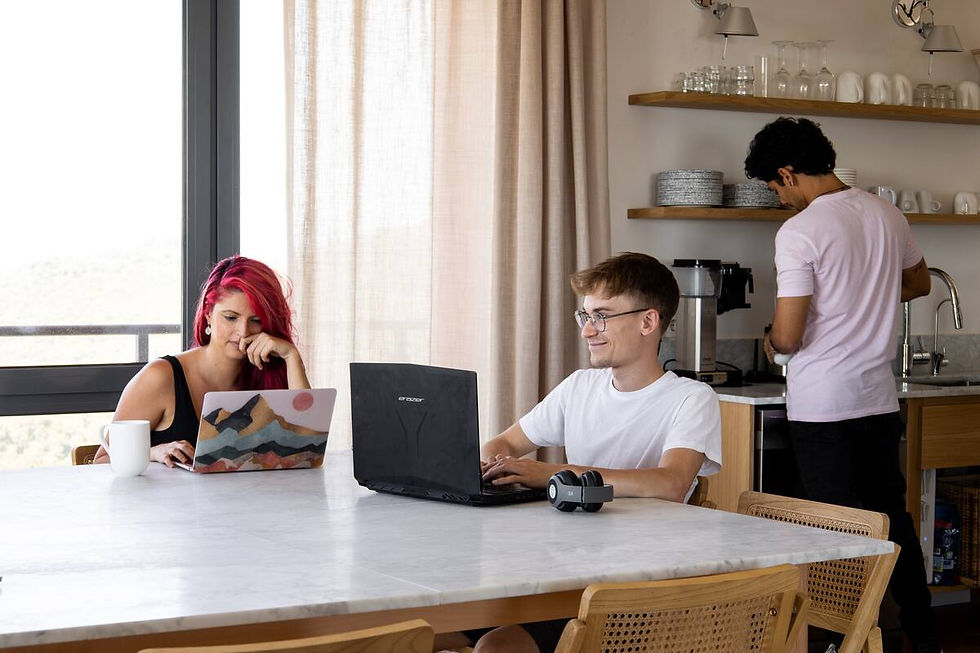
The real accelerant sits somewhere quieter: the people you share a kitchen, a coworking table, or a living room with. Your daily environment trains your instincts long before any tool does.
Tools Optimize Tasks. People Optimize You.
A tool executes a function. It sends the email, tracks the invoice, schedules the call. Useful, certainly, but limited to the task in front of it.
The people around you operate on a completely different layer. They shape your standards for what counts as good work, your appetite for risk, and the speed at which you consider something "normal." A founder living among ambitious, focused people absorbs their pace almost by accident. Someone surrounded by comfort and low expectations absorbs that pace too, even when they intend otherwise.
Human proximity compounds. Software depreciates.
Your Environment Sets Your Baseline
People tend to measure their own ambition against whoever is closest to them. Wake up every day near people building seven figure companies, and a slow, unproductive morning starts to feel like a waste. Wake up near people who treat their business as a side project, and that same slow morning feels completely fine.
Nobody sits you down and gives you a lecture on ambition. The shift happens quietly, through everyday moments: a conversation over breakfast, the energy in a shared workspace, a simple question from someone about how your week is going. Over time, those small moments end up shaping your own sense of what counts as normal.

Knowledge Moves Through Proximity, Not Platforms
Search engines and forums answer the questions you already know how to ask. The advice that actually changes a business trajectory tends to arrive sideways, through a comment overheard while making coffee or a casual "have you tried this" from someone two seats over.
At Circles House, this pattern shows up constantly. Members describe getting unstuck on a pricing model, a hiring decision, or a legal question during a rooftop dinner rather than during a scheduled meeting. The information existed online too, buried somewhere in a thread. Living alongside someone who already solved that exact problem simply moved the answer closer, faster, and with more context than any search result could offer.
Shared Living Builds Accountability You Cannot Automate
A calendar reminder is easy to dismiss. A housemate asking how the launch went at dinner is not. Physical proximity creates a mild, constant social pressure to follow through, the same pressure that makes gym partners more consistent than solo gym goers.
This dynamic runs through the events at Circles House too. A dinner, a workshop, or a Sunday hike puts people from wildly different industries in the same room on a regular rhythm. Founders end up reporting progress to people they respect, simply because those people will ask again next week. That rhythm builds discipline that a productivity app can prompt but never enforce.

Diversity of Thought Beats Depth of Features
A tool solves the problem it was designed for. A diverse household solves problems nobody anticipated, because someone in the room has faced a version of it before. A lawyer turned founder, a former engineer, a marketer who spent years in a completely different industry: each person carries pattern recognition that a single founder, working alone, simply cannot replicate.
This is one of the quieter benefits of coliving spaces built around entrepreneurs. The mix of backgrounds under one roof means a question about supply chains, fundraising, or hiring in a new country usually has an answer within walking distance.
Choose Your Living Space as Carefully as Your Tools
Every founder audits their software regularly, cutting subscriptions that no longer earn their keep. Few founders apply that same scrutiny to their living situation, despite it carrying far more weight on their growth trajectory.
The people sharing your space set your pace, expand your network, and hand you knowledge exactly when you need it. A well chosen home, filled with people building at a similar intensity, functions as infrastructure just as real as any piece of software on your laptop.
Choose your tools with care. Choose your living space with even more.